Showing posts with label Motivation. Show all posts

2014-01-03

Primary motivator

When you see people's intellect fading away due to dementia, when brain is loosing control and cultivated manners do not cover primary impulses any more then you see that fear is a very primary motivating factor.

But fear is very present in our every-day decisions - not only when the brain is loosing control. If you look behind some of your core priorities and decisions, you may find that a lot of your actions are intended to increase an inner feeling of safety. Or, when you investigate some of your first reactions on other people's arguments in discussions, you may detect yourself feeling attacked. The common root is fear/anxiety. The two core options inherited from our very past when fear comes up is to attack or flee.

But:
  • In modern times there are a lot of options between those two extreme reactions. (taking it with humor is a great one).
  • You are not alone with your fear. Guess what: Person's attacking you (verbal, nonverbal or physically) may fear you more than you fear them! The best strategy might be, assuring the others that you are coming in peace.
     
  • Fear and the instinctive reactions are good advisors in situations of imminent danger (for physical health - e.g. when face-to-face with a saber-toothed tiger), but not in most common daily situations (e.g. in meetings, negotiations, when having discussions with friends or family members etc).
     
  • The power of others often is overestimated while the own power is underestimated. In many cases where you might experience fear, there is no reason for it.
A good strategy is to eliminate fear and the automatic reactions wherever there is no actual danger given and replace it with a moment of meditation before any overhasty reaction.

Related posts: Your situation does not suck, The fear, About habits, Plan to get fear done, Something more important, Spam critics, The present moment.

2011-11-08

Living on others costs

Whenever I stand in front of my brother's grave I get reminded about the fact that I would have never met my wife if he would still be around.

I don't know if I would have married anyway and whom. And if I would have had the two wonderful children I do have now. Everything would be different I think.

What I also get reminded then in the next step is: Whenever people die, they make place for other life. And then I notice all the small things that are said and done harming others in one or the other way.

I think - in the same moment - of people getting exploited in their work and of people being psychological harmed for the sake or fun of somebody else.

We should remember that we do not have more permission to live than anybody else. I abominate people who just think of their own advantage, but dealing severely with myself, I can find myself also sometimes being egocentric.

There is overall equilibrium of life on this planet, just distribution of amount and quality varies from one corner of the world to another.

If I still would have my brother around, of course attention of my parents would be shared on us both. If he would have family probably we would see my parents less often to help us out looking after the children etc. - I must be thankful of the attention that I get and keep in mind, that whenever people are doing me a favor, they could have done for somebody else ... and maybe there would have been other people having a more serious and more urgent need for that attention...


2011-09-02

Be united

Lately I observed a larger group of children on a water playground.

Children were pumping water which flew down in a small river to a dam and later to a mill-wheel or the water could take a different way to another pump. To make the mill-wheel move, it was necessary to impound a certain amount of water.

The goal was set (by the children themselves) to make the mill-wheel move by the water. Basically there were 4 points of action:
  • Pump water
  • Set a switch point to go to other pump or versus the mill-wheel
  • dam (open or close)
  • Mill-wheel
As we left, the group of children has not been able so far to get the mill-wheel turned by the water.

Major reasons:
  1. Uncoordinated action.
  2. Several group members following different directives / having different goals.
  3. Egoism and greed.
  4. Missing patience.

Some wanted the dam to be closed and others wanted to see the water flowing, some wanted to play with the other pump and started to quarrel about how to put the switch. Although one had the great idea to put the switch in the middle so that half of the water went to both sides, there was always somebody who moved the switch trying to get all the water.

Does this remind you to something?

When they are adults, their brains are developed enough to handle more complex situations but the basic behaviour will not change.

In large companies and larger projects you can observe the same as what I described above.

How to get over this:
  • Have clear responsibilities. The less people working on the same thing the better.
  • Split into smaller groups/teams where continuous alignment of directives and goals is possible.
  • The character and philosophy of the people working together, is important because their personal goals derive from that. So discuss strategies to get a team where everybody is convinced about the decisions.
  • In the long-run you should satisfy the need of all parties/customers/partners, so they can trust you to solve their issues. That is the challenge of a team leader...
  • Withdraw stress wherever possible. The stressed person will concentrate on self and develop egoistic inner directives.
Related posts: Replace constraint with freedom, Show respect to the team.

2011-01-20

Getting older

I was not sure if I should post about old-age, because I don't have experience in being old. But: I do see the problems that come along with getting older and I talked to several people who know how it feels to loose mobility, flexibility and tend to forget.

When I look at my recent family history, some members became over 100 years old, another one (even if not got that old) started learning Spanish and how to play the piano when he was already in his sixties). I think I am at risk not making it until 100 - but who knows.

I want to summarize a few essentials to keep in mind:
  • Retain physical fitness and health
    Do some sports and movement (of course do not exaggerate). My father in law (over 70) does a lot walking and he is in good shape. He was used to walk into town center and back nearly every day (now less).

    A few years ago I read an article about interview that have been done with people above 100 and asked them what they do and what their behaviors are - to find out the secrets of staying healthy. Basically they found out that those people did not have much in common. A single thing was: Once a day they all where sweating...

    And then I saw an interview with the oldest Italian (also a few years ago). He was a shepherd - and basically sleeping a lot.
     
  • Don't focus on yourself too much
    Many people, when getting old, focus on their sufferings, worry much about their health, worry about change, worry about how they will survive with the increasing amount of help they need and so on.

    I can see that those, who (still) focus on serving others, who are interested in (learning new) things, focus on doing (be it sports, literature or handicrafts) etc - stay better.
     
  • Train your brain
    A big issue can be the memory that cannot hold (especially short-term) information very well any more - people can be physically healthy but the brain slowly gets inflexible and people forget faster.

    It is important to know that your brain is like a forest where you can throw in quite every information and it remains there. The problem is usually to find the information. You need to walk through that forest to create paths to the information stored in your brain. This means: You need to fetch the information. So, if you do much reading or go to the theater etc - basically just consuming - talk with your buddies, friends or even foreigners or make use of the know-how you have in any other form (giving talks or writing also helps).
The worst thing that can happen is to give up yourself. I have also asked friends about their grand-parents - how they become old and what they experienced etc. - even if it is just going out once a day - if you stop activity, you lose. Use it (yourself) or lose it! A rolling stone gathers no moss!

Related posts: One-way ticket, Dynamic activity, The state of mind matters, Take care of you, About drugs, Urging to forge at full speed.

2010-02-10

Living your opportunities

The problem: The gap between what you are and what you would like to be.
When I was a little boy, I was day dreaming quite a lot. This was paired with optimism (my father told me that I was a very open and positive child) and lead to expectations a lot of times. The final effect often was a lot of suffering after disappointment. Especially last year I read so much about living your dreams and how you could be the most successful beast ever existed. A very common delusion is that everything is feasible. The reality shows that
  • only a very few people do have really big success,
  • very successful people are not always final winners at the end (some even end up in jail),
  • success (not only in form of money) often comes with the fear to loose it (if material success) or with the fear to get obsolete (invention, knowhow etc) and
  • people tend to never get enough of success (however they define it - it is subject to change).
Everybody wants to be successful and happy but only a few really get it.

The reason: Misuse and misunderstanding of success, hope, confidence, positivity and the like.
Success can be defined in many particular ways and often people dream something and are optimistic to achieve everything if they just want it strongly enough. And they are "doers" first. At the final end (or earlier) on the other hand they tend to redefine success of being that what they could achieve during their life. So at the beginning there was the dream and at the end there was reality. What needs to be developed is the control instance separating dreams and hope from reality and opportunities.

After failing a lot of times because of those mistakes I started switching to a pessimistic view. To save me from suffering when coming down to reality. I expected the worst to experience positive surprises rather than disappointments. Effectively this was the other extreme I could go without proper separation of those terms. But the root mistake was basically putting too many terms and elements of life into the same pot.

The solution: Be happy and choose opportunities.
A first thing is to redefine success as "being happy" (in long-term view). Don't accept others defining success or happiness for you. Look deep into your heart and personality. You might prefer looking after children over inventing a cool gadget or you might want to show others the world or you might want to contribute with good music to this world.

Second you need separation of terms: Love (for yourself and all your peers) is a base requirement for a positive life. Hope is a difficult word and I usually don't use it. But as used in many contexts I found it is best to see hope as an overall confidence that universe is evolving in the way it should after you did your contributing duty to make everything better. You should know that nothing tends to change in a direction you desire without you taking action to contribute appropriately. Faith can be the self-confidence, drive, energy and trust to get appropriate help where needed and asked for. Expectation can be the patience to wait for the results of your work (done with pure conscience) taking effect (whatever that will be) and the willingness to learn from it. Using these terms wisely leads to balanced positivity.

Last but not least: Keep your eyes and ears open. See the opportunities in your life but be aware that you can't choose them all. So select wisely your path and know that right and wrong cannot be seen absolutely - it depends on what can bring happiness into your life. Success is not necessarily being well-known or earning a lot of money.

Related posts: In the present moment, Success with optimism AND pessimism, How to be happy, Direction over goals, Principles over rules, The main purpose, Your situation does not suck.

2009-12-19

Needs and Meaning

I did not write for a while due to several reasons. First I invested a lot of private time into building technical knowledge slightly different from my daily work. That held me back from writing more posts already earlier, but sometimes such is necessary if you want to grow - see also "Knowledge is freedom".

The second reason is the birth of our second son. Unfortunately after the first two weeks it turned out, that he has a tachycardia and needed to stay under intensive care. A few days ago we got him back home with medication and a heart monitor.

What I learned from this recently:
  • Luck, happiness and healthiness is fragile.
    When he was born I was so happy to have two sane children. Now I know how fast that can change. - I should already know this very well - everything is fleeting...

  • Replace worrying with real risk management.
    When situation is bad we are full of sorrows and when everything is fine we actually need to worry about our properties and health fading away. So we could spend our life worrying all the time or simply stop it because anyway it does not make anything better. This is not to be put together with not being aware! - We should be aware of potential risks and problems! We should do our best to act healthy and ethical! But plain worries focus just on all the possible bad results without real risk management and taking any action - so our day-to-day repeating worrying really does not make any sense.

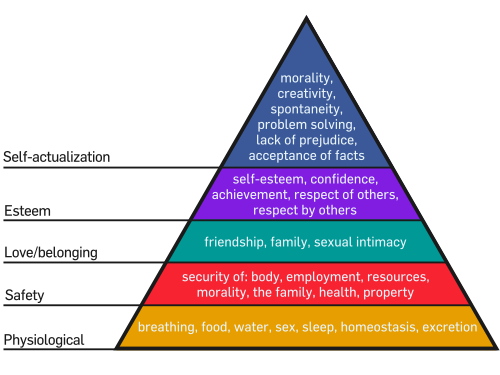
  • Maslow is quite right with the hierarchy of needs.
  • Viktor Frankl was quite right also.
    He has written about man's search for meaning and developed the logotherapy. He basically states that we can discover meaning in life in three different ways: (1) by creating a work or doing a deed; (2) by experiencing a value – nature, a work of art, another person, i.e., love; (3) by the attitude we take toward unavoidable suffering.

  • Be thankful for every help you get.
    Especially doctors often have a negative image, but they really can save your life (or in our case the life of our son).
Related posts: Biggest worries, Knowledge is freedom, The most important things to know, All done status, There is suffering.

2009-04-10

Know better and act on it

I am currently reading the book "Secrets of the Rockstar Programmers", written by Ed Burns.

I only read a few pages so far, but I consider the content being "zipped" knowledge, as it touches many realms, not just the technical points of view. Already from the first pages the book / Ed encourages me to "boldly go where nobody has gone before" (or in some particular details to boldly return to things that worked better in the past). Actually I consider this book to be a book on self development or a book on management also. And this is the reason why this post goes to 1-2-solved blog and not to IT-Tactics.

Ed quotes Rod Johnson mentioning an important skill: "Knowing better and act on it".

In the last years I am facing more and more people and companies following just the sure path - the path that is "known to be working". People do this from my experience mainly because of the following reasons:
  • Fear to be wrong (and all the other so many people can't be wrong)
  • Fear to loose business and market.
  • Search for the quick success/money (short "time to market" - go the easy way)
  • Minimizing costs and risks (no investment into research and development)
  • Personal limits (people simply don't have better ideas or just don't bother)
But following paths that are known to be working also means that there are already many people there where the path leads to. I think people can't expect outstanding success by just providing something that plenty of others already do offer. This does not necessarily apply to regional suppliers (thinking of the supermarket in the neighborhood, haircutter, doctor, ... - although good quality or unique product offers attract new customers from the distance).

Some other words on "doing what works": Going the sure path means to do what in the past turned out to be working. What worked good in the past does not necessarily work (that good) now. On the other hand: A lot of strategies that worked very well in the past have been dropped in favor of others that do not work so well.

So, some things change that shouldn't and other things should be changed. In our fast times people often rush and quick-fix. People do not take time to sit down (or walk slowly), think and listen to their gut feeling. If they would, there own experience and knowledge could take off and have effect on the now. Then they could see and know better. Then take action on it and you will succeed!

Related posts: Think yourself, Total cost of commitment, Slowing down, Dynamic activity, In the present moment, Get focused with 3 questions, Simple Life, Razor sharp focus, The value of experience.

2009-03-20

Optimist meeting pessimist

Putting optimists and pessimists together is a potential conflict source. Under the shower I had the following thought:

The optimist should not cross the border to frivolity. The pessimist should not cross the border to angst/anxiety. If both go to meet each other they meet at reality.
And at reality you find people exercising reasonable care, being motivated by the positive goal in mind and with the intention of long-term positive evolution.

Related posts: Positivity barricades, The power of intention, Healthy motivation, Between short and long term goals, Success with optimism AND pessimism.

2009-02-07

How to instantly change a habit

It is February and I guess there are already a lot of drop outs from new years resolutions.

There has been a lot written about how to change a habit (me included ;-) ). Important tips are for instance:
  • Only one habit only at a time.
  • Select a new different habit (as change is only possible if you have an alternative).
  • Start with single step towards your desired life style or new habit (e.g. instead of not eating sweets just reduce your consume a little bit).
  • If you can walk a different road for a month, it's done (if you didn't felt back to your old habit for a month then it's solved).
  • Review your situation more often (weekly or at least monthly - once a year is clearly not enough).
  • ...
Changing a habit is hard work, isn't it? - Not necessarily: If you got the kick - THE reason - then you can also be able to change a habit in an instant.

When people talk about shocks that happen in childhood they are often talking about a key insight, a crucial experience that changed their view of the world and life goals or priorities in an instant. - Such experiences and insights are not always caused by a tragedy or accident.

As I read lately in the post "How to Think Better: The Top 8 Tips from the Last 2500 Years" at The Positivity Blog:
“People mistakenly assume that their thinking is done by their head; it is actually done by the heart which first dictates the conclusion, then commands the head to provide the reasoning that will defend it.”
Anthony de Mello
So if you want to change a habit (from deep in your heart and not because of some trend around) then you somehow already decided that you want to change, you already have an idea - a big picture - of what should be.

Watch out for the key reason - for the key experience, that erases all doubts, that makes it completely clear why you should change as soon as possible.

Examples:
  • Stop smoking because it simply isn't healthy.
    I never smoked but I got explained from a coroner (with pictures from lungs etc) what effects smoking have and why. In addition to the ingredients of the cigarette other dust and stuff included with air gets deposited in the lungs then.
  • Being depressed after you got criticized is simply wrong.
    You must be happy because of a honest feedback. If it is true then you have the opportunity to correct the problem and if it is wrong then you have the opportunity to get stronger representing your position.
  • ...
Related posts: Quickly change a habit, Speed.

2008-10-27

When changing the environment does not help

Lately I had a strange experience. A person was frustrated and taking things very personally and serious where it seemed exaggerated to me. The problems of this person were obviously to me.

First I thought that the person simply was not able to see and therefore didn't learn the lessons. So I decided to go for an attempt to help. I tried to explain and give hints for what to change.

I would have expected everything but the clear statement that the person don't want to change because for 20 (or more) the person behaved that way and wants and it worked well. Although I even have some doubts that it always worked well this way, I mentioned that it can be clearly seen that now it does not work any more.

As the discussion continued I could see that this person would take every effort and any cost to change the environment - everything but changing the own way of thinking, way of doing and interpretation of things. I have never seen such a hard "desire" to continue suffering.

When I thought of changing the environment sometimes in the past the first question I asked myself:

Would it really be an efficient step to change the environment or would I just take the problems I have in the current situation with me and face the problems again (and maybe even more)?

In most cases when people change the environment they hope for better environments somewhere else but they forget that they are themselves contributing a lot to the situations and another lot is their interpretation of the things happening.

Often people change the environment to escape from problems but they just take their problems with them instead of solving them and so they never find the environment where they can be happy.

That definitely is not always the case - but you should do a self-check before you carelessly change the environment with wrong expectations.

Related post: Change the environment.

2008-09-26

The big difference of the How

Marc Lesser gave a talk "Accomplishing more by doing less" at Google. While the talk is a bit too long for my favor there was a very interesting exercise he got his audience to do: He asked each to talk 3 minutes with his neighbor about one thing that one is doing being somehow an "extra" - something, that if not done, would make a big difference.

So I was asking myself: Why am I doing that - if I would stop it - would make a big difference?

My answer is: I was searching for some big project I am working on, some life plan but I cannot really find such a big thing that would really make a big difference. If not me, then somebody else will manage projects or write software - this is not MY extra. Even writing a life hacking blog is not my extra. ;-)

I am working to get my family and me fed, that is the most important of my doing. I think my extra is that I am there for my family because they love me. - If I am away I am earning money to contribute on their economic situation and when I am with them they are happy being together with me. I am a valuable person for my family. If I would escape or pass away it would make a big difference for them.

It is no matter what work I do, if I develop software, clean the toilets (indeed I do that also as we do not have a cleaning lady at home ;-) ) or if I would manage a company. Maybe I could find a big project it is worth putting a lot of effort into. But reality shows that there are only very few people like Gandhi or Einstein. Although there are websites listing a lot of important people, the biggest part of human beings are sitting at some cash desk, doing some office work or being another type of "simple" worker. It does not mean that these people cannot be outstanding performer in their workspace or in their branch. Lately I read about the most dangerous jobs and the most dangerous job listed at careerbuilder is being a fisherman! And how much fish are we eating without being aware of that! Thanks to all those doing dangerous jobs for our comfort! They are not considered as being so important because they seem to be easily replaceable by others but in the sum they are important. But while doing things that are or can be done by many others also - how can you be outstanding anyway?

So the second big lesson from asking me that question is: It is less important WHAT I do, it is more important - and makes more difference HOW I do it!

When I come home and do something together with my family it is much more important that I am present, listen to them and handle them with care. The awareness of being together affectionately is far more important than the particular thing we are doing.

And again (earlier posted in "To be important") I remember a part of a song text: It's nice to be important - it's more important to be nice!

Maybe we work on some very important project - maybe we will in the future and maybe not. Good, if we can look back and say that HOW we did our job, HOW we treated our family and friends, was good.

Related posts: To be important, Who cares?, The most important things to know, Humor heals, Respect by attention, About religions, Imagine the missing, Finding the proper priorities, Between short and long term goals, Ethic economy, Prudential innovation, Cost of substitution.

2008-09-02

Spam critics

The problem: Loosing self-esteem due to overwhelming criticism.
To prevent from social exclusion it is necessary to seek for confirmation. Without approval of our actions in the world and communicating with our fellow human beings we would not be able to live together. So social adjustment is important.

But it can happen that critics of others occur in masses reducing your self-esteem and it could cause depression.

The reason: Greed for love and credit, Fear of others, bad social adjustment.
  • Bad social adjustment:
    If you in general are very lonely, only have a very few friends then it might be necessary to quality proof your strategies for social adjustment.
  • Greed for love and credit:
    You might already have poor self-esteem and therefore seeking confirmation, credit and affection everywhere. Every critics is again reducing your already poor self-esteem. And others with the same problem not able to increase their own value try to reduce yours.
  • Fear of others:
    Others may fear your power, your authenticity, your charisma. In such cases it also can happen that you are criticized a lot.

The solution: Appreciate every constructive critics and discard the rest.
There are two ways to deal with different kind of critics:
  • Every critic is a chance to learn. Critics are donations to you to help you in your personal development. But these must be constructive. You might have a number of friends (more likely less than five) who you fully respect or at least consider being constructive and honest real friends. There can also be family members playing such a role for you. Critics coming from those should be considered with a higher priority and you should deal with it.
  • To deal with critics is work for you, because you have to deal with the problem - analyze, think of other strategies, review. And the big problem is that there are spammers here. And be careful with social hostility. Getting completely negated by others can drastically reduce self-esteem although you do not need to consider those people (or let's say their critics). People, continuously offending you and telling you that you are wrong on any little opportunity should be considered as spammer and hence they can be ignored.
You cannot please everybody - focus on those who matter for you (basically the family, close friends and customers).

If they breath down your neck then just tell them what they want to hear (for instance that you are terrible sorry) - give sugar to the ape and just let it go. This is probably the most easy way to get rid of them. They are not part of you - you do not need to be honest and sincere. Although in general you should like to be a honest and authentic person, there are brick-walls where you need to search for new methods.

For those who fear your power you can deal with them the same way as you deal with spammers, but you can see it as a confirmation for you!

Related posts: Who cares?, All Done status, When to criticize, The family, Primary motivator.

2008-08-21

Healthy motivation

Yesterday I had a discussion with a friend about my last post "There are no problems".

He mentioned that expectations are a motivation to continue taking action, work and trying to overcome obstacles.

I agree with him that expectations can be a motivation although I do not think it's the best choice to have expectations as a main motivation. Anyway in that posts I was only talking about expectations being too high when you experience problems.

And he also stated that there are serious problems where he cannot just screw down his expectations. Sample: Your baby is very ill. If you don't make a problem of it and just do not expect any more survival then this is not a healthy and good mentality.

Let's imagine I would be able to drop all expectations in an instant: I wouldn't let someone die only because I don't have any expectation! Either without any strong desire (greed) I wouldn't let somebody die!

I will help because of love, compassion and the intention to do healthy things (for me, for you and for everybody).

I do think that my friend would bring his baby to hospital more because of love than because of expectations!

I want to quote from an earlier post ("Expectation dropping"):
when you do something you do it out of the current necessity or benefit without having to fear investment loss (because you simple do not invest - at least long term),
Maybe the only expectation I want to keep is that world can be improved. But this is more a believe than an expectation (see also "Being positive").

Related posts: There are no problems, Expectation dropping, Being positive, The power of intention, Ethic economy.

2008-08-19

There are no problems

Sometimes I get told to be more positive. I do not want to be pessimistic but life often let me experience problems while trying to achieve something.

That does not mean that I do not continue working on a solution and often I am successful in finding a solution or at least a workaround. But when people ask me about a topic I mostly do point out possible pitfalls and obstacles that might come up while implementing a solution for the particular problem.

I do not really see this as being negative - I always find it realistic considering the most probable hurdles. And often a set of little issues can reduce general feeling of satisfaction. I just want to avoid such issues in the beginning by choosing the solution attempt where less issues are expected to come up (according to experience and feeling in the belly).

But however, most people do not want to hear about (possible) problems. They "simply" want to have everything working - no discussion - they don't accept problems.

Today I discovered that they are right:

There are no problems - just expectations might be too high!

And I am not responsible for other people's high expectations. That is something they have to live with.

Related posts: Expectation dropping, Success with optimism AND pessimism, Positivity barricades, Healthy motivation, When to criticize, Optimist meeting pessimist.

2008-08-15

All Done status

The problem: You cannot relax while open work is waiting to be done.
There is so much to do - although we are optimizing and improving efficiency there still remains so much on our to-do lists. We are always in a hurry because we need to do more things and faster.

The reason: Open issues make us staying uncomfortable.
We want to get our head empty, clear everything out to be free for one new thing that we can focus on in tranquility and undisturbed.

Or maybe we simply learned: First the work then the leisure time.

The solution: Stop hunting for the "All Done" status and focus on the things that matter.
The desire to have a single thing you can concentrate on and everything else is in archived status is an unrealistic hope.

And imagine if you would have this status and then get in boredom status and focus on a single thing only: While thinking and working on the single thing, do you really believe that you then will not get a hundred ideas and thoughts that are triggered by working on one particular thing?

So why trying to achieve such an unrealistic status that there is nothing left to do? All you could get then is the feeling of being worthless in a sudden.

Instead focus on the really important things - focus on the things that matter (to you or the world)!

Related posts: Who cares, Information Overflow, Reduce the stress factors, What is reality?, Hurry home ... no more running, Being like a child, Needs and meaning.

2008-07-07

Lessons from a baby

I am back from vacation. In former times I slept and read more on vacation. This time I invested the time with our baby. I want to share some things I can learn from my 9 months old son:
  • He is feeling well no matter where he is as long as the loved ones are around.
    We often refuse being happy because the hotel room is too small or when we find the beach dirty - things that do not really count in life.

  • Have a smile for every new person you meet.
    Although he does not talk and does not have cool things like a fast car, an iPod or other cool things, he found a lot of friends. Meeting a new person the first thing he did, was looking in the eyes and smiling and so he managed it.

  • Invest time in looking at a new situation or thing before immediately taking action.
    In a lot of cases I could see that he is looking around a long time when confronted with something new. This is a good habit in my opinion which can save you some harm.

  • Everything new is a reason for happiness.
    When you get notice of something new it is at first a reason to be happy. Everything new has the potential of being useful. At least - if it is not - you can say that this also has been tried or taken into consideration.

  • Listen mindfully.
    Although he does not understand much so far, he is listening very attentive when you talk to him.

  • Insist in your right to be respected by others.
    When he is ignored for a longer while he is rising his voice and complains about the fact that he is not taken into consideration. When you respect others and take them into consideration it is your right also to be taken into consideration and that others respect also your needs.

2008-05-20

Expectation dropping

The problem: Manic depression
Although manic depression is a well known psychological illness a lot of people not classified as manic depressive anyway suffer from manic and depressive phases in their life.

The reason: Expectations and wishes
Expectations are the motivation for a lot of actions you wouldn't do without the result you hoped for. You delay happiness until a specific goal has been reached. When you have success or simply too many things worked in the past you are mislead to higher goals and higher expectations. When reality tears you back to earth you fall into depressive phase because you did a lot of things "for nothing". You didn't got honored, you didn't earned the expected amount of money or some other outcome of your work turns out to be useless.

The solution: Drop your expectations
Dropping expectations initially sounds like dropping any motivation for getting to action and is pure negativism. But take a second view. When you drop your expectations
  • everything that works or results in a positive feeling it is a pure wonder,
  • when you do something you do it out of the current necessity or benefit without having to fear investment loss (because you simple do not invest - at least long term),
  • you can also drop a lot of fears in form of negative expectations.
Without expectations you easier can decide from one moment to the other whether to invest more time into a specific action or not. When you do things for other persons, do it as a gift, this let you feel distributing love to others.

Related posts: Success with optimism AND pessimism, positivity barricades

2008-02-08

This can be used as a weapon

Many years ago I traveled with my family to the USA and we met very nice friends there. They showed us how to play baseball and when leaving they presented us a baseball bat as a gift to carry home. As the bat was too big to put into the normal luggage we went to carry it with us onto the plane. Arrived a stewardess stopped us with the words "this can be used as a weapon" and told us that they will take it and send us by post. Since this it happens sometimes that I remind those words.

Lately I talked to a few people who worry about leaving their footprints somewhere in the web and therefore participate only very few on forums or weblogs. What this has to do with the story above?

Well, in my opinion a lot of things and words can be used as a weapon. And no matter if you are a person getting active or if you stay passive some people could use your behaviour against you.

And on the other hand: A lot of things and words can be used to improve the world and help others. Introducing positive elements is more important than avoiding negative elements.

Let me give an example: If you participate on the web there could be bad guys sending you more spam, hacking your account and post harmful texts in your name or other things producing negative effects. But on the other hand you can use the web to expand your network, find friends, help other people or even get a well-known professional on the web.

Whatever you fear, take into consideration that usually everywhere are risks AND opportunities. Keep in mind that you do not live from avoiding negative but from producing and getting positives - like a good coffee, intensive good work, a pretty woman or a good glass of wine.

Take your choice.

2008-02-01

Detach facts and risks from fears and from decisions

In the post Michael Jordan’s Guide to Shooting for the Stars at The Positivity Blog I read today:
When you are actually out there, be detached from outcomes.

“I never looked at the consequences of missing a big shot . . . when you think about the consequences you always think of a negative result.”
Well, while in sports it might fit the needs I would take care of applying that rule to the rest of life.

It is good looking at the consequences because all the actions you perform will have their consequences and knowing the consequences before would often lead to other decisions.

Thinking of (possible) consequences does include thinking of negative results. If you think of a failure in general as an opportunity to learn then failure is never considered in a negative way and positive experiences will be the "only" harvesting the fruits of earlier improvements.

When thinking of negative results produces negative feelings and fears then you should separate first the facts then think of the risks. In the next step analyze your fears coming along with thinking of the risks. Last but not least take your decisions when you can have a detached view so that you do not feel so emotionally involved.

2008-01-22

Hear the naysayers

In life hacking blogs I often read that you should avoid negative people. Lately I read such a recommendation again at Life Optimizer. The last paragraph states:

15. Get rid of naysayers

While gathering around enthusiastic friends can energize you, gathering around naysayers will do the opposite: they will take away whatever positive energy you have. So avoid them at all costs. Of course, sometimes you need to reach out to them, but be sure that you energize them and not they take away your energy. You should always be open to constructive criticism, but avoid people who just make you down without giving constructive feedbacks.

I say: Hear what the naysayers have to tell. Let them draw the worst case scenarios for you. There are three reasons for them to be negative:
  • They locate problems and pitfalls - they see difficulties achieving the particular goal.
  • They fear the results - they worry about the changes that your actions may bring.
  • They want to achieve the goal themselves - and they want to make you down because they want to get to the goals earlier.
You can benefit in all three cases:
  • You can rate the probability of problems at the particular locations and do something to avoid the problems.
  • The naysayers are most probable not alone with their fears - you can do something to make them feel more secure. This will attract even more people to your solutions.
  • Envious people are a sign that you are aiming for valuable goals - working on them seems to be worth it also for others.
Sure, stubborn pessimism can be exaggerated and there is a time when you should prefer the presence of more positive people. But you are not sessile - you can move on.